
Melt Blown Filter Cartridge
FAQ - Melt Blown Filter Cartridge
Frequently Asked Questions on Melt-Blown Filter Cartridges for Industrial Filtration
-
1. What is a melt-blown filter cartridge?
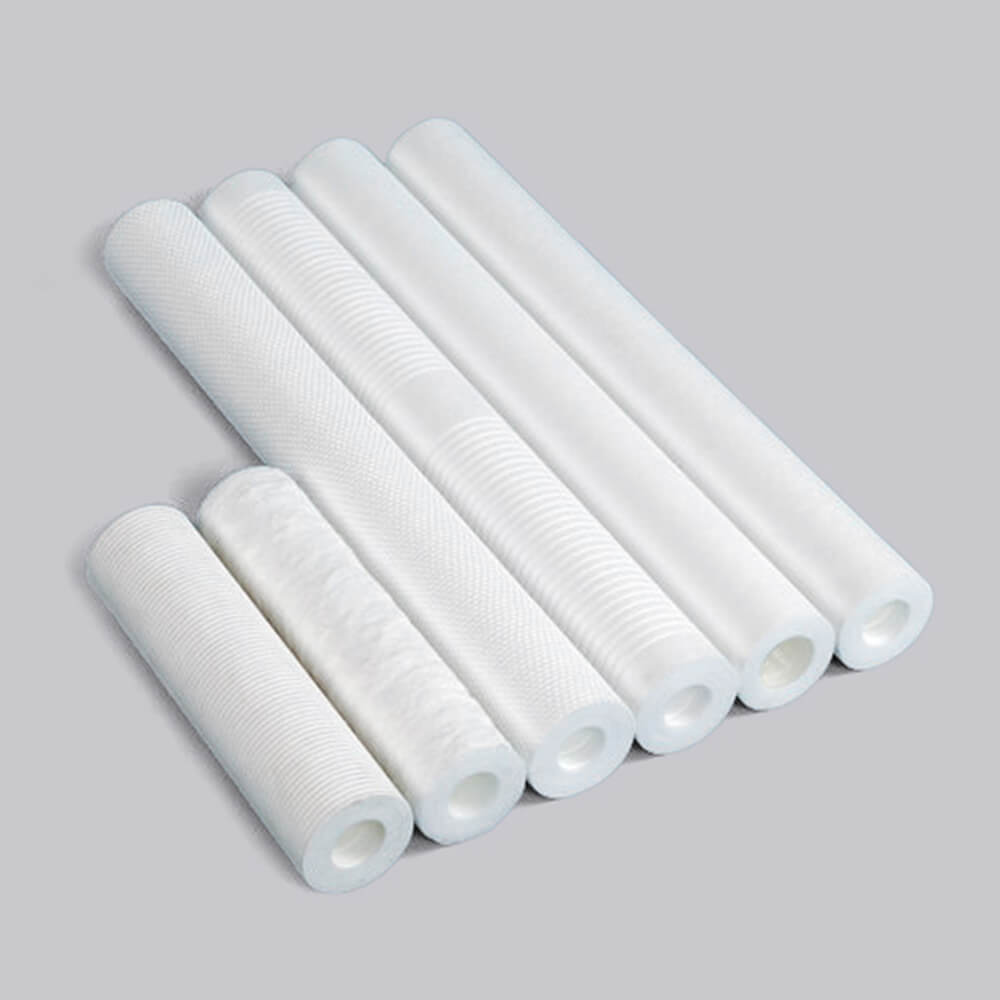
A melt-blown filter cartridge is a depth filter made from polypropylene fibers that are thermally bonded into a gradient density structure, designed to capture particles throughout the filter media rather than just on the surface.
-
2. What are the typical applications of melt-blown cartridges?
They are widely used for water treatment, food and beverage filtration, chemical solutions, and pre-filtration for membranes, especially in applications requiring removal of suspended solids and particulate matter.
-
3. What are the filtration ratings available?
Melt-blown cartridges typically range from 0.5 µm to 50 µm, depending on the application and level of filtration required.
-
4. What is the maximum operating temperature?
Standard polypropylene melt-blown cartridges can operate continuously up to 80 °C, while some specialized high-temperature versions may tolerate higher temperatures.
-
5. What is the recommended differential pressure?
Most melt-blown cartridges can handle up to 0.4 MPa at 21 °C. At elevated temperatures, the allowable differential pressure may decrease, typically to 0.24 MPa at 80 °C.
-
6. Can melt-blown cartridges be backwashed or reused?
Standard polypropylene melt-blown cartridges are generally disposable and not designed for backwashing. Reusable options are available but require special design.
-
7. How does the melt-blown process improve filtration performance?
The gradient density structure created during melt-blowing provides a larger dirt-holding capacity and more efficient particle removal, while maintaining low pressure drop.
-
8. Are melt-blown cartridges chemically compatible?
They are compatible with a wide range of aqueous solutions and some mild chemical solutions, but not suitable for strong oxidizing agents or high concentrations of organic solvents.
-
9. What sizes and connection types are available?
Lengths usually range from 10” to 60”, with outer diameters of 63 mm. They can be supplied with various end cap types (DOE, SOE, flat, etc.) to fit standard housings.
-
10. How often should the cartridge be replaced?
Replacement frequency depends on water quality, flow rate, and particle load. Typical cartridges should be replaced when the pressure drop reaches the manufacturer’s recommended limit or filtration efficiency decreases.